Navistar
NAME
SERVICE
DATE
Vehicle Monitoring System
User Experience (UX) Design
July 2023
PROJECT OVERVIEW
Designed a scalable internal platform for Navistar that helps fleet managers monitor vehicle health, access diagnostic data, and locate nearby services all within a single, intuitive system.
PROJECT BRIEF
A cohesive system that connects vehicle insights, services, and records into one clear flow. The prototype was successfully tested with product owners, validated across key use cases, and adopted for implementation setting the foundation for Navistar’s new vehicle management experience.
PROJECT OUTCOME
I led the design of data-heavy dashboards and workflows from the ground up defining information architecture, creating navigation standards, and establishing reusable table components for consistency across modules. The goal was to simplify how managers track vehicle health and make maintenance decisions in real time.

PROBLEM STATEMENT
How might we create a unified platform that gives fleet managers a clear, real-time view of vehicle performance while helping them complete key workflows from diagnostics to locating nearby services faster and with greater confidence?
How might we create a unified platform that gives fleet managers a clear, real-time view of vehicle performance while helping them complete key workflows from diagnostics to locating nearby services faster and with greater confidence?
1. Research & Understanding Users
Collaborated with internal stakeholders to map user journeys from daily fleet checks to responding to fault codes. Analysed their workflow pain points to identify moments of friction and opportunities for simplification.
2. Information Architecture
Defined a scalable structure for key modules: Dashboard → Vehicles → Details → Alerts → Nearby Services.
This established clear pathways between high-level insights and deep-dive data reducing navigation loops and cognitive load.
3. Component & Data Standards
Developed a data table framework with filtering, sorting, and quick-glance states that could be applied across different datasets. This became a standard reference for Navistar’s future modules.
4. Prototyping & Testing
Built interactive prototypes to validate design logic and navigation clarity with product owners. Feedback sessions confirmed that users could complete key tasks (finding alerts, checking diagnostics, locating service stations) significantly faster.

DESIGN PROCESS
1. Research & Understanding Users
Collaborated with internal stakeholders to map user journeys from daily fleet checks to responding to fault codes. Analysed their workflow pain points to identify moments of friction and opportunities for simplification.
2. Information Architecture
Defined a scalable structure for key modules: Dashboard → Vehicles → Details → Alerts → Nearby Services.
This established clear pathways between high-level insights and deep-dive data reducing navigation loops and cognitive load.
3. Component & Data Standards
Developed a data table framework with filtering, sorting, and quick-glance states that could be applied across different datasets. This became a standard reference for Navistar’s future modules.
4. Prototyping & Testing
Built interactive prototypes to validate design logic and navigation clarity with product owners. Feedback sessions confirmed that users could complete key tasks (finding alerts, checking diagnostics, locating service stations) significantly faster.
DESIGN SOLUTION
OUTCOME
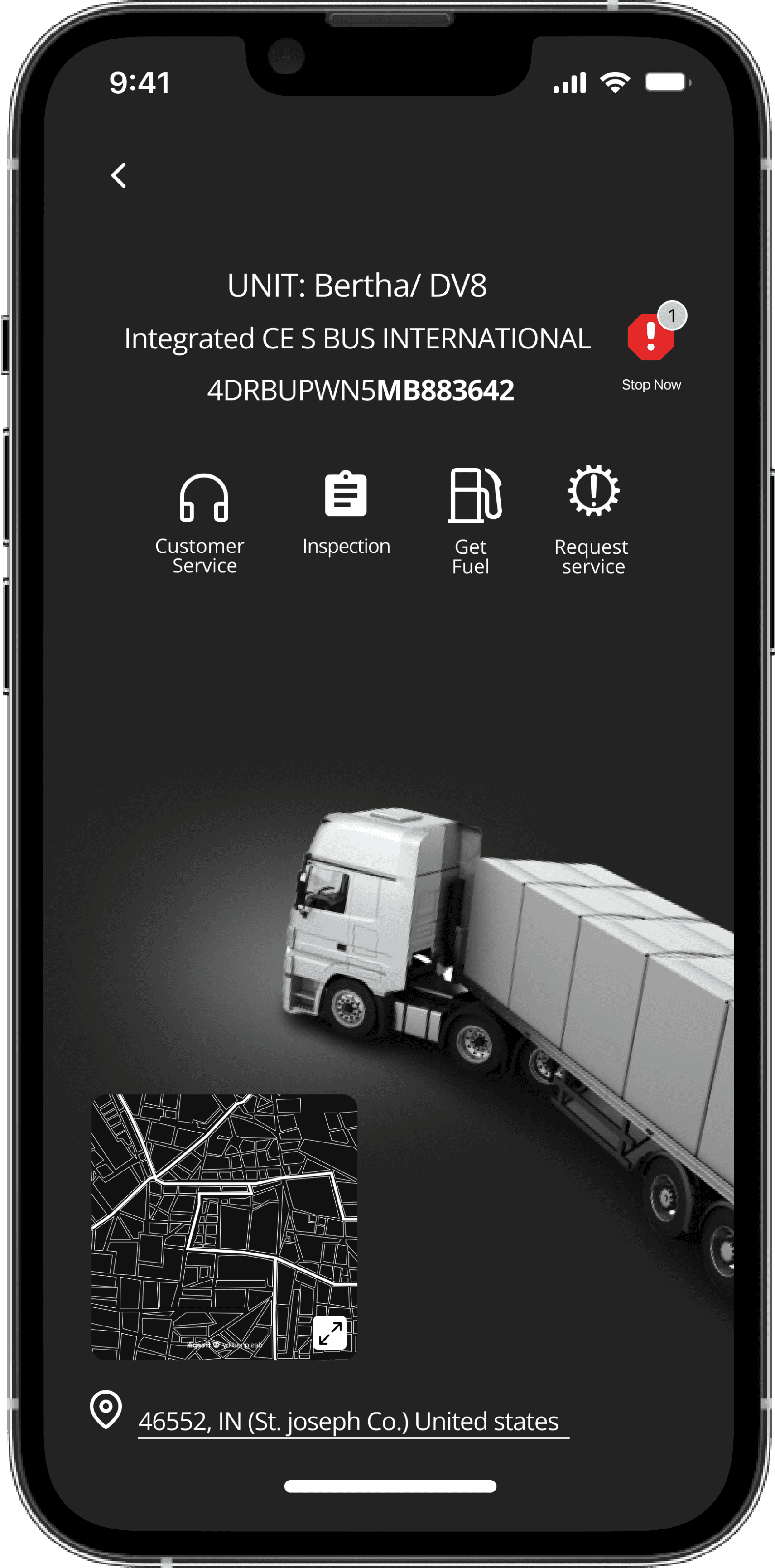
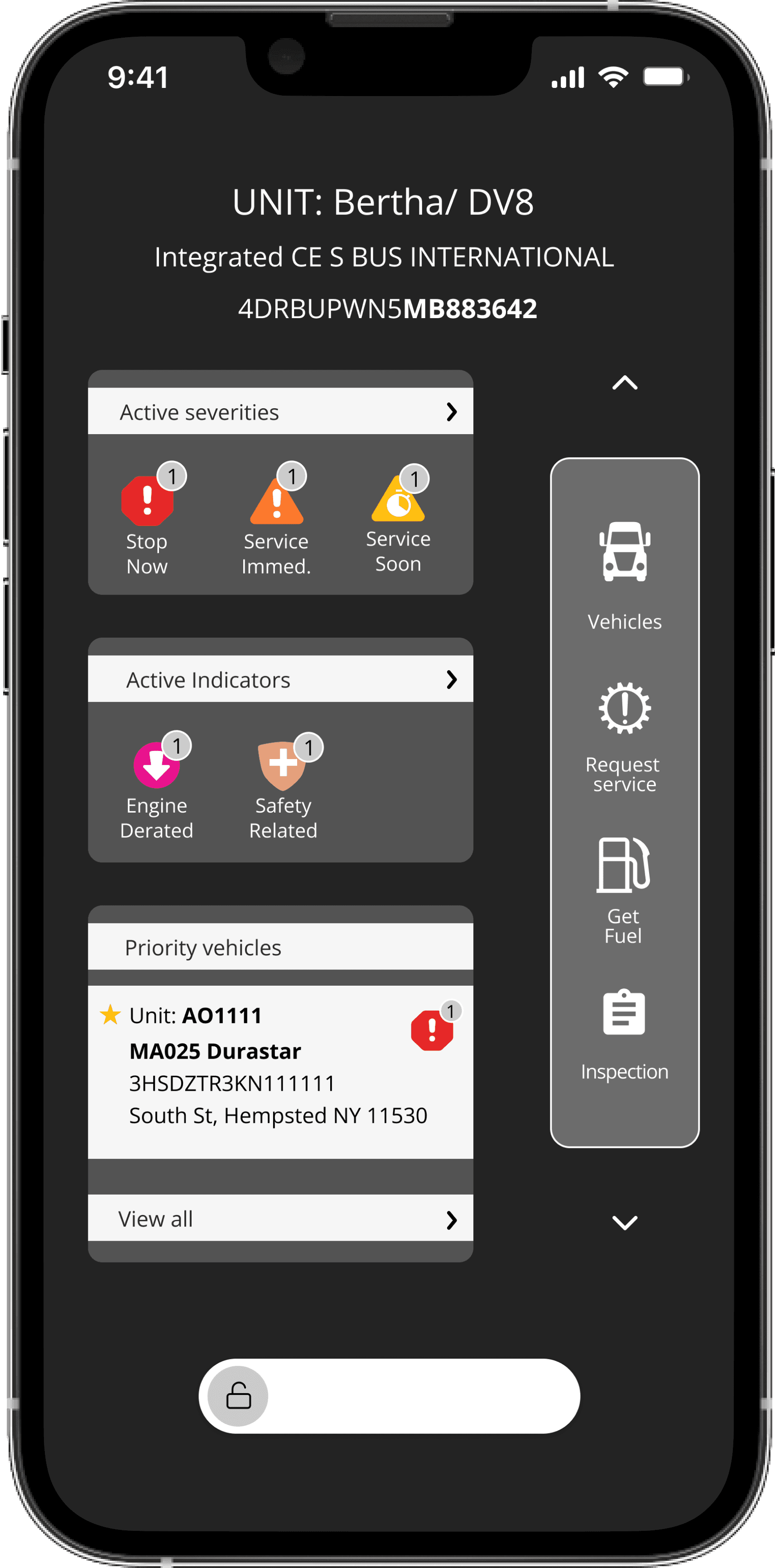
A modular dashboard layout for real-time monitoring
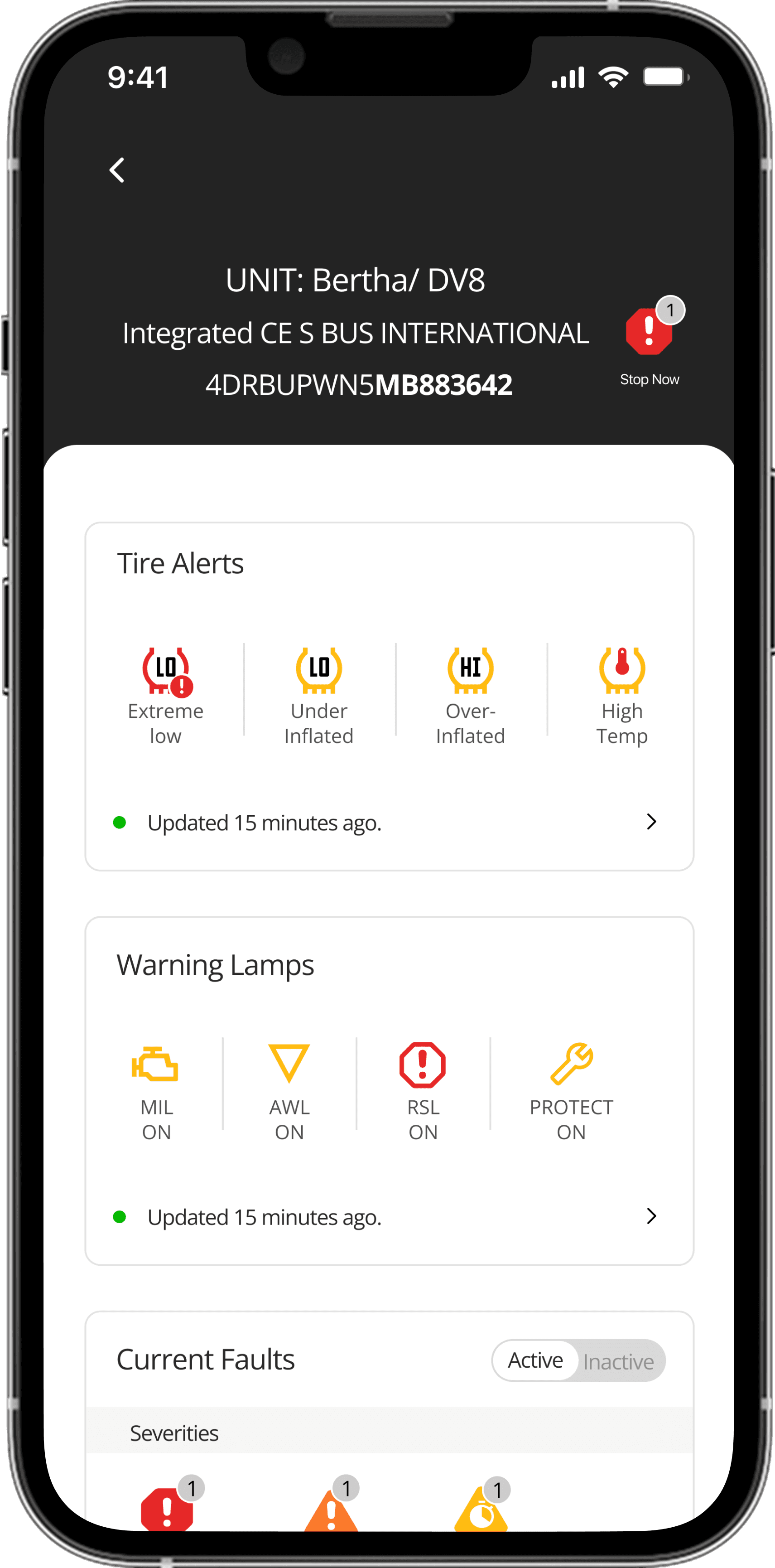
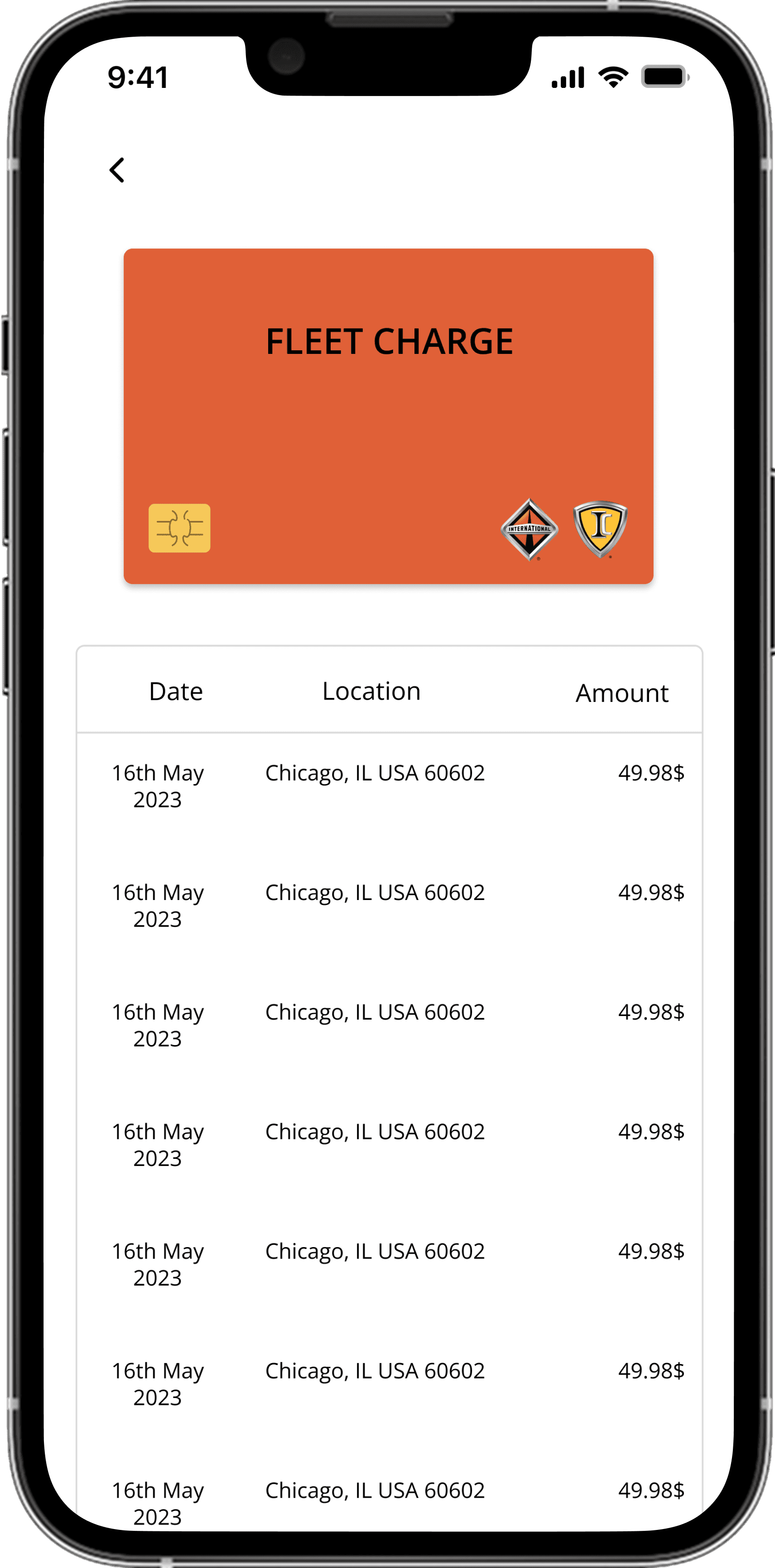
Consistent table and card components for vehicle data
Nearby services feature prototype to assist in-route decision-making
Navigation improvements with contextual breadcrumbs and clean hierarchy
Accessible visual system adhering to WCAG 2.1 standards

A cohesive, tested system that connects vehicle insights, service data, and diagnostics into one unified experience.
The prototype was approved by multiple product owners and moved toward implementation establishing design standards that shaped Navistar’s internal platform moving forward.
This project taught me how to balance technical complexity with visual simplicity designing for clarity without stripping away depth.
Working closely with my project manager honed my ability to communicate design intent to non-design stakeholders, ensuring every decision aligned with business goals.
REFLECTION


DESIGN SOLUTION
OUTCOME
A modular dashboard layout for real-time monitoring
Consistent table and card components for vehicle data
Nearby services feature prototype to assist in-route decision-making
Navigation improvements with contextual breadcrumbs and clean hierarchy
Accessible visual system adhering to WCAG 2.1 standards
A cohesive, tested system that connects vehicle insights, service data, and diagnostics into one unified experience.
The prototype was approved by multiple product owners and moved toward implementation establishing design standards that shaped Navistar’s internal platform moving forward.
This project taught me how to balance technical complexity with visual simplicity designing for clarity without stripping away depth.
Working closely with my project manager honed my ability to communicate design intent to non-design stakeholders, ensuring every decision aligned with business goals.
REFLECTION
PROJECT OVERVIEW
Designed a scalable internal platform for Navistar that helps fleet managers monitor vehicle health, access diagnostic data, and locate nearby services all within a single, intuitive system.
PROJECT BRIEF
A cohesive system that connects vehicle insights, services, and records into one clear flow. The prototype was successfully tested with product owners, validated across key use cases, and adopted for implementation setting the foundation for Navistar’s new vehicle management experience.
PROJECT OUTCOME
I led the design of data-heavy dashboards and workflows from the ground up defining information architecture, creating navigation standards, and establishing reusable table components for consistency across modules. The goal was to simplify how managers track vehicle health and make maintenance decisions in real time.
PROBLEM STATEMENT
How might we create a unified platform that gives fleet managers a clear, real-time view of vehicle performance while helping them complete key workflows from diagnostics to locating nearby services faster and with greater confidence?
DESIGN PROCESS
1. Research & Understanding Users
Collaborated with internal stakeholders to map user journeys from daily fleet checks to responding to fault codes. Analysed their workflow pain points to identify moments of friction and opportunities for simplification.
2. Information Architecture
Defined a scalable structure for key modules: Dashboard → Vehicles → Details → Alerts → Nearby Services.
This established clear pathways between high-level insights and deep-dive data reducing navigation loops and cognitive load.
3. Component & Data Standards
Developed a data table framework with filtering, sorting, and quick-glance states that could be applied across different datasets. This became a standard reference for Navistar’s future modules.
4. Prototyping & Testing
Built interactive prototypes to validate design logic and navigation clarity with product owners. Feedback sessions confirmed that users could complete key tasks (finding alerts, checking diagnostics, locating service stations) significantly faster.
TOOLS
Figma, Miro
DESIGN SOLUTION
OUTCOME
A modular dashboard layout for real-time monitoring
Consistent table and card components for vehicle data
Nearby services feature prototype to assist in-route decision-making
Navigation improvements with contextual breadcrumbs and clean hierarchy
Accessible visual system adhering to WCAG 2.1 standards
A cohesive, tested system that connects vehicle insights, service data, and diagnostics into one unified experience.
The prototype was approved by multiple product owners and moved toward implementation establishing design standards that shaped Navistar’s internal platform moving forward.
This project taught me how to balance technical complexity with visual simplicity designing for clarity without stripping away depth.
Working closely with my project manager honed my ability to communicate design intent to non-design stakeholders, ensuring every decision aligned with business goals.
REFLECTION
PROJECT OVERVIEW
Designed a scalable internal platform for Navistar that helps fleet managers monitor vehicle health, access diagnostic data, and locate nearby services all within a single, intuitive system.
PROJECT BRIEF
A cohesive system that connects vehicle insights, services, and records into one clear flow. The prototype was successfully tested with product owners, validated across key use cases, and adopted for implementation setting the foundation for Navistar’s new vehicle management experience.
PROJECT OUTCOME
I led the design of data-heavy dashboards and workflows from the ground up defining information architecture, creating navigation standards, and establishing reusable table components for consistency across modules. The goal was to simplify how managers track vehicle health and make maintenance decisions in real time.
PROBLEM STATEMENT
How might we create a unified platform that gives fleet managers a clear, real-time view of vehicle performance while helping them complete key workflows from diagnostics to locating nearby services faster and with greater confidence?
1. Research & Understanding Users
Collaborated with internal stakeholders to map user journeys from daily fleet checks to responding to fault codes. Analysed their workflow pain points to identify moments of friction and opportunities for simplification.
2. Information Architecture
Defined a scalable structure for key modules: Dashboard → Vehicles → Details → Alerts → Nearby Services.
This established clear pathways between high-level insights and deep-dive data reducing navigation loops and cognitive load.
3. Component & Data Standards
Developed a data table framework with filtering, sorting, and quick-glance states that could be applied across different datasets. This became a standard reference for Navistar’s future modules.
4. Prototyping & Testing
Built interactive prototypes to validate design logic and navigation clarity with product owners. Feedback sessions confirmed that users could complete key tasks (finding alerts, checking diagnostics, locating service stations) significantly faster.
DESIGN PROCESS
DESIGN SOLUTION
OUTCOME
A modular dashboard layout for real-time monitoring
Consistent table and card components for vehicle data
Nearby services feature prototype to assist in-route decision-making
Navigation improvements with contextual breadcrumbs and clean hierarchy
Accessible visual system adhering to WCAG 2.1 standards
This project taught me how to balance technical complexity with visual simplicity designing for clarity without stripping away depth.
Working closely with my project manager honed my ability to communicate design intent to non-design stakeholders, ensuring every decision aligned with business goals.
REFLECTION
A cohesive, tested system that connects vehicle insights, service data, and diagnostics into one unified experience.
The prototype was approved by multiple product owners and moved toward implementation establishing design standards that shaped Navistar’s internal platform moving forward.